UniWave Electric UniWave Electric

Top 10 AC and DC Contactor Types What Is the Difference?

Time:2026-09-10 Author:Ethan
0%

Choosing a contactor is not simply an AC-versus-DC decision. It affects coil heating, arc suppression, switching life, noise, and equipment safety. This guide, “Top 10 AC and DC Contactor Types: What Is the Difference?”, examines those details through practical application examples.

The key question is: what is the difference between AC and DC contactors? AC contactors commonly use laminated magnetic cores and shading rings. These features reduce coil vibration and humming during alternating-current operation. DC contactors usually require stronger arc-control methods because current does not naturally cross zero. A visible arc can continue across the contacts. That small detail can change the required contact spacing, magnet design, and enclosure size.

Mike Holt, a widely referenced electrical-training authority, explains the basic function clearly: “A contactor is an electrically controlled switch used for switching power circuits.” That definition is simple. Real selection is not. IEC 60947-4-1 provides the main international framework for low-voltage contactors and motor starters. Reports from MarketsandMarkets and Grand View Research also identify expanding demand for contactors in motor control, renewable energy, automation, and electric vehicles. Their market forecasts support the trend, though forecast methods can differ.

This introduction compares ten common types, including general-purpose, motor-duty, capacitor-duty, vacuum, reversing, and DC high-voltage contactors. It considers coil voltage, load category, breaking capacity, duty cycle, and installation conditions. A rating that looks adequate on paper may fail in a dusty cabinet or under frequent switching. That is where many quick comparisons become incomplete.
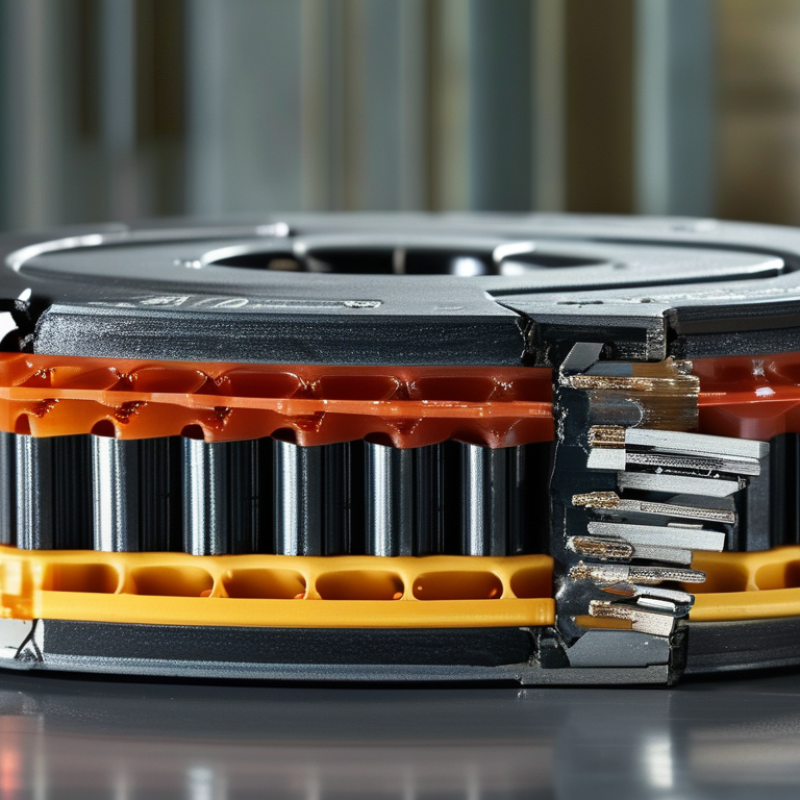
Top 10 AC and DC Contactor Types What Is the Difference?

AC and DC Contactors: Core Principles and Key Differences

AC and DC contactors use an electromagnetic coil to move power contacts. The operating idea is simple. A control signal energizes the coil, and the contacts connect or disconnect a load. In practical panel work, the coil voltage must match the control circuit exactly. An AC coil usually includes shading features to reduce vibration and humming. A DC coil needs a steady magnetic field and often draws current continuously.

The main difference appears when contacts open. AC naturally crosses zero voltage during each cycle, helping the arc extinguish. DC has no natural zero crossing, so its arc can last longer and damage contact surfaces. DC contactors therefore need stronger arc control, greater contact spacing, or magnetic blowout arrangements. Polarity can also matter, especially in high-current battery and motor circuits. Reversing the designated terminals may reduce interruption performance.

Load type changes the selection. AC motor, lighting, capacitor, heating, battery, and photovoltaic contactors may carry different stresses. Current ratings alone are not enough. In field inspections, inductive loads often reveal poor choices through welded contacts or excessive heat. A quiet coil does not prove safe operation. Contact material, switching frequency, enclosure temperature, and short-circuit protection also deserve review. Engineers sometimes focus too heavily on voltage ratings. That habit needs reconsideration. The best choice matches the circuit’s real switching behavior, not only its nameplate current.

Top AC Contactor Types and Their Typical Applications

Top AC Contactor Types and Their Typical Applications

AC contactors control high-current circuits through an electrically operated coil. Their design must match the load, switching frequency, and installation environment. Choosing by voltage alone is a common mistake.

Definite-purpose contactors are widely used in air-conditioning units, refrigeration systems, and heat pumps. They handle compressor, fan, and condenser motor loads. Motor-duty contactors suit pumps, conveyors, machine tools, and workshop equipment. Their ratings often reflect AC-3 operation, where a motor starts and later disconnects under running conditions. Reversing contactors combine two mechanically or electrically interlocked devices. They change motor direction in cranes, hoists, and automated doors. Interlocking matters. A wiring error can cause severe equipment damage.

Lighting contactors serve offices, warehouses, parking areas, and street-lighting panels. They support scheduled switching and centralized control. Capacitor-duty contactors are built for power-factor correction banks. Special contacts can limit high inrush current when capacitors energize. Safety contactors are used in machine-control circuits where feedback and monitored disconnection are required. They are not a substitute for a complete risk assessment.

In field inspections, heat, loose terminals, and frequent cycling often cause failures before the contactor reaches its theoretical life. I would verify the coil voltage, load category, short-circuit protection, enclosure rating, and available fault current. The neatest classification can still mislead. Real installations overlap, and a specialist should confirm the selection when motor starts are heavy, switching is rapid, or ambient temperatures are unusual.

Top DC Contactor Types and Their Typical Applications

DC contactors control high-current circuits in batteries, vehicles, charging systems, and industrial equipment. Their design affects safety, heat, service life, and switching performance. Sealed contactors suit dusty or humid environments because their enclosed chambers reduce contamination and arcing risks. Polarized DC contactors are common in battery systems, where current flows mainly in one direction. Non-polarized types handle reversed current paths more flexibly, but they may require different arc-control designs.

High-voltage DC contactors are used in electric vehicles, energy storage cabinets, and charging stations. They often include ceramic insulation, gas filling, or magnetic arc suppression. Smaller auxiliary contactors support control circuits, pre-charge functions, and interlocking. In practice, technicians select the contactor by continuous current, breaking capacity, coil voltage, insulation rating, and expected switching frequency. A 300-ampere rating does not guarantee safe interruption at every voltage. That detail is often underestimated.

Tips: Check the real load, not only its label. Motors and capacitors can create sharp inrush currents. Confirm coil suppression requirements, because an incorrect diode can damage the control circuit. Inspect terminal heating during commissioning. Leave space for cooling. When reviewing a design, question whether the contactor must interrupt fault current or only normal operating current. That distinction can change the required device type. Field conditions are rarely perfect, so a small safety margin is sensible.

Comparing AC and DC Contactors by Design, Performance, and Safety

Top 10 AC and DC Contactor Types: What Is the Difference?

AC and DC contactors can look similar, yet their arc-control requirements differ sharply. The ten common categories include general-purpose AC, motor-duty AC, reversing AC, capacitor-switching AC, lighting AC, general-purpose DC, battery DC, photovoltaic DC, high-voltage EV DC, and polarized DC contactors. AC designs benefit from current zero-crossings, which help extinguish arcs. DC current has no natural zero point, so manufacturers often use magnetic blowout systems, longer contact gaps, or sealed chambers. Small details matter.

Performance depends on the load, not only the voltage rating. A motor contactor handles inrush and repeated switching, while a capacitor contactor needs measures against high charging current. DC battery and EV contactors must manage sustained arcs and possible pre-charge sequences.

The International Energy Agency reported more than 17 million electric cars were sold globally in 2024, representing over 20% of new-car sales. That growth increases demand for compact, high-voltage DC switching. However, market growth does not make every contactor suitable for every battery system.

Safety evaluation should follow the application category and installation conditions. IEC 60947-4-1 addresses contactor performance, utilization categories, temperature rise, and endurance testing. Engineers should verify short-circuit coordination, insulation distance, coil suppression, and enclosure protection.

A practical weakness remains: simplified selection charts can hide altitude, humidity, or frequent cycling effects. Field testing under the real load is still necessary. Sometimes, the “correct” rating looks correct only on paper.

How to Select the Right Contactor for an Electrical System

Top 10 AC and DC Contactor Types: What Is the Difference?

Selecting the right contactor begins with the load, not the product label. AC contactors suit alternating-current motors, heaters, and lighting circuits. DC contactors handle direct current, where arc extinction is more difficult. Voltage, continuous current, inrush current, switching frequency, and coil voltage must match the system. IEC 60947-4-1 provides key requirements for low-voltage contactors and motor starters. It should guide verification, not replace engineering judgment.

The IEA Electricity 2024 report forecasts global electricity demand to grow by about 3.4% annually from 2024 to 2026. More electrical equipment means more switching cycles and greater reliability pressure. For motor loads, check utilization category, locked-rotor current, overload coordination, and auxiliary contacts. For battery or solar systems, confirm DC polarity, maximum interrupting voltage, and suitable arc-control design. Ambient temperature, dust, vibration, enclosure space, and maintenance access also matter. A neat specification can still fail in a hot cabinet.

Tips: Record real operating data before selecting. Measure startup current. Check the coil circuit separately. Leave thermal margin. In field reviews, a common mistake is choosing by rated current alone. That number may describe resistive loading, not a motor’s severe starting duty. Review the manufacturer’s test conditions and independent certification records. If the application is unusual, ask a qualified engineer to validate the duty cycle. Small omissions become expensive.

Top 10 AC and DC Contactor Types: What Is the Difference and How to Select the Right Contactor

Comparison of common contactor types, electrical duty categories, typical ratings, applications, and key selection factors. Ratings are indicative; the final choice must follow the applicable standard, load data, and manufacturer datasheet.

No. Contactor Type Current System Typical IEC Utilization Category Typical Voltage Range Typical Current Range Common Pole Arrangement Typical Applications Main Advantages Important Selection Considerations
1 AC-1
General-Purpose AC Contactor
AC AC-1 for non-inductive or lightly inductive loads Up to approximately 690 V AC in industrial systems Approximately 9–1,000 A, depending on frame size and duty 2, 3, or 4 main poles Heaters, resistance furnaces, distribution switching, and general resistive loads Simple construction, broad availability, and good performance with relatively low inrush loads Do not size it only by the AC-1 current if the load is a motor, transformer, lamp bank, or capacitor. Select a higher-duty category when substantial inrush or frequent switching is present.
2 AC-3
Squirrel-Cage Motor Contactor
AC AC-3 for starting and stopping squirrel-cage motors during normal operation Commonly 220–690 V AC Approximately 6–800 A, expressed as motor-rated current or power Usually 3 main poles for three-phase motors Pumps, fans, compressors, conveyors, machine tools, and HVAC motors Designed to handle motor starting current and normal inductive interruption Match the contactor to motor power, voltage, full-load current, starting method, switching frequency, and motor service duty. Add overload protection separately.
3 AC-4
Jogging, Plugging, and Reversing Contactor
AC AC-4 for inching, plugging, dynamic braking, and frequent reversing Commonly 220–690 V AC Often selected at a lower continuous rating than AC-3 for the same motor 3 poles per contactor; two mechanically or electrically interlocked contactors for reversing Positioning drives, cranes, hoists, elevators, rolling equipment, and frequent start-stop machinery Handles severe switching conditions and repeated motor current interruption Check the permitted operations per hour, duty cycle, motor current, electrical life, and interlocking requirements. AC-3 ratings are not automatically suitable for AC-4 duty.
4 Capacitor-Switching
Capacitor Duty Contactor
AC Capacitor-switching duty; commonly associated with power-factor correction applications Commonly 230–690 V AC Selected according to capacitor kvar, voltage, harmonic level, and inrush current 3 poles for three-phase capacitor banks; auxiliary contacts may control damping resistors Reduces the effect of high capacitor inrush through pre-insertion or damping resistors in suitable designs Use a capacitor-duty contactor rather than a standard motor contactor when high inrush or back-to-back capacitor switching is expected. Check detuned reactors and harmonics.
5 Lighting Duty
Lamp and Lighting Contactor
AC Lighting loads with inrush-sensitive electronic drivers, LED power supplies, discharge lamps, or tungsten lamps Typically 120–480 V AC, depending on the lighting circuit Often 20–100 A, but the permissible lamp load may be much lower than the resistive current rating 1–4 poles, selected according to circuit arrangement Street lighting, commercial lighting, building automation, and centralized lighting control Suitable for repeated remote switching of lighting circuits and control systems Evaluate lamp type, driver inrush, power factor, parallel circuits, neutral switching requirements, and the manufacturer’s specific LED or lamp rating.
6 DC-1
General-Purpose DC Contactor
DC DC-1 for non-inductive or lightly inductive DC loads Commonly 12–1,000 V DC, depending on design and insulation rating Approximately 10–1,000 A, depending on voltage, cooling, and switching duty 1 or 2 main poles; series poles may be required at higher DC voltages Resistive heaters, DC distribution, control panels, and non-motor DC loads Effective for steady DC loads when correctly rated for voltage and current DC arcs do not naturally pass through zero, so contact spacing, magnetic blowout, polarity, and series-pole requirements are critical.
7 DC-3
DC Motor Contactor
DC DC-3 for shunt motors; duty requirements vary with starting and regenerative conditions Commonly 24–800 V DC Approximately 20–600 A, with short-duration starting current potentially much higher 1 or 2 poles; polarity and armature-field circuits must be evaluated Forklift equipment, battery-powered machinery, conveyors, winches, and DC drive systems Designed for inductive motor loads and the energy released when a DC motor is disconnected Check motor starting current, regenerative energy, switching frequency, inductance, suppression, contact polarity, and required electrical life.
8 High-Voltage DC
Battery and EV Contactor
DC Battery and high-voltage DC switching duty; often includes precharge control Typically 400–1,000 V DC in modern battery systems Approximately 100–1,000 A continuous, with short-duration overload capability specified separately Usually 1 or 2 main poles; auxiliary contacts may provide welded-contact monitoring Electric vehicles, battery energy storage, charging equipment, solar-plus-storage systems, and DC fast-charging cabinets Sealed arc chambers, compact construction, low gas emission, and reliable switching of high-energy DC circuits Confirm continuous current, breaking current, short-circuit coordination, precharge requirements, insulation resistance, environmental sealing, coil suppression, and auxiliary feedback.
9 Polarity-Reversing DC
Reversing or Dual-Contactor DC Assembly
DC DC motor reversing or bidirectional load switching Commonly 12–400 V DC, depending on contactor construction Approximately 20–500 A, with peak current determined by the motor or actuator Two contactors or a dedicated double-pole reversing arrangement Electric traction, winches, actuators, material-handling equipment, and mobile machinery Provides forward and reverse operation without mechanical power electronics in basic systems Use electrical and mechanical interlocking where required. Prevent simultaneous energization, verify polarity limits, and allow adequate time for current decay before reversal.
10 Latching / Bistable
Energy-Saving Contactor
AC or DC load circuit; AC or DC control coil Load category depends on the switched load, such as AC-1, AC-3, DC-1, or DC-3 Load voltage may range from low-voltage DC to approximately 690 V AC, subject to the specific design Commonly 16–400 A, with larger industrial versions available 1–4 main poles; one pulse or dual-coil control arrangement Battery systems, emergency power, building automation, remote disconnects, and applications requiring low standby consumption Maintains its state without continuous coil power, reducing control-panel heat and energy consumption Confirm the set/reset pulse requirements, manual override behavior, fail-safe position, auxiliary indication, and behavior after control-power interruption.

Selection reminder: Choose a contactor by load category, operating voltage, continuous and inrush current, switching frequency, electrical life, short-circuit coordination, coil voltage, environmental conditions, pole configuration, and required auxiliary contacts. A contactor provides switching; overload relays, fuses, circuit breakers, and suitable control protection may still be required.

FAQS

: What does an

C contactor do?

Which contactor suits air-conditioning equipment?

A definite-purpose contactor usually suits air conditioners, refrigeration units, and heat pumps. It can control compressors, fans, and condenser motors.

When should I use a motor-duty contactor?

Use one for pumps, conveyors, machine tools, and workshop equipment. Check motor-starting current and the required AC-3 utilization category.

What are reversing contactors used for?

Reversing contactors change a motor’s direction. They appear in cranes, hoists, and automated doors.Interlocking is essential.

What protects lighting circuits?

Lighting contactors support scheduled or centralized switching. They fit offices, warehouses, parking areas, and street-lighting panels.

Why are capacitor-duty contactors different?

They manage capacitor banks used for power-factor correction. Special contacts help reduce the sharp inrush current during energizing.

How do AC and DC contactors differ?

AC contactors switch alternating current. DC contactors need stronger arc-control designs because direct-current arcs are harder to extinguish.Check polarity carefully.

What should I check before selecting a contactor?

Check voltage, continuous current, inrush current, coil voltage, switching frequency, and load category. Also review short-circuit protection and overload coordination.Rated current alone can mislead.

Why do contactors fail in real installations?

Heat, loose terminals, dust, vibration, and frequent cycling can shorten service life. A crowded cabinet may overheat even with correct ratings.I would verify actual field conditions.

Are safety contactors enough for machine safety?

No. Safety contactors support monitored disconnection and feedback circuits. They do not replace a complete risk assessment or proper safety design.

Conclusion

AC and DC contactors are electrically controlled switches designed to manage power circuits, but their operating conditions create important differences in structure and performance. This guide explains what is the difference between AC and DC contactors by examining their core principles, contact arrangements, coil requirements, arc-control methods, and typical applications. AC contactors are commonly used in alternating-current systems such as motors, heating equipment, lighting, and industrial control panels, while DC contactors are designed for direct-current loads, including battery systems, vehicles, renewable-energy equipment, and backup power applications.

The article also introduces the main types of AC and DC contactors and compares them in terms of switching behavior, electrical endurance, safety, maintenance, and installation requirements. Because DC arcs are more difficult to extinguish than AC arcs, DC contactors often require specialized arc suppression and insulation designs. Selecting the right device depends on voltage, current, load category, switching frequency, environmental conditions, coil control voltage, and required safety features. A careful match between the contactor and the electrical system can improve reliability, energy control, and operational safety.

Ethan

Ethan

Ethan is a seasoned marketing professional with a deep expertise in our company's innovative product line. With a passion for sharing knowledge and insights, he takes the lead in regularly updating our corporate blog, where he explores industry trends, product features, and effective marketing......