UniWave Electric
Choosing the right circuit breaker size for a motor is crucial for efficient operation. Industry reports indicate that improper sizing can lead to costly equipment failures. According to the Electrical Safety Foundation International (ESFI), up to 30% of electrical failures are due to inadequate circuit protection.
"Understanding how to choose the right circuit breaker size for a motor is essential for operational safety," says Dr. James Parker, a prominent electrical engineer and consultant. His insights underline the importance of accurate sizing to prevent overheating and potential motor damage.
Circuit breaker size directly influences performance and longevity. A breaker that is too large may fail to protect the motor, while one that is too small can trip frequently, leading to downtime. These issues emphasize the need for careful consideration and expert guidance in selecting the appropriate size. It's not just about choosing a number; it's about ensuring reliability and safety in every application.
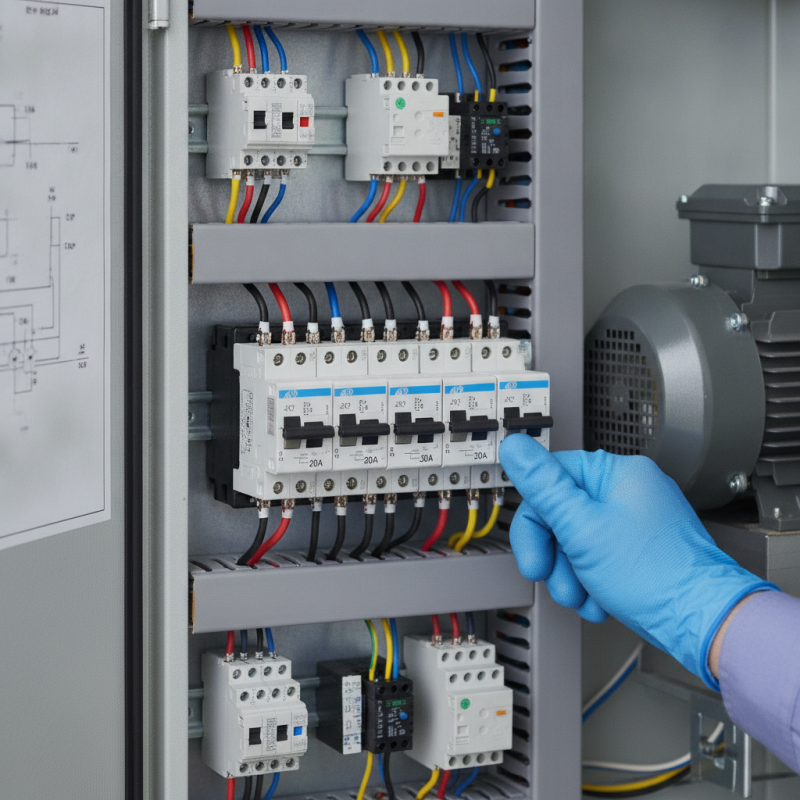
When selecting the right circuit breaker size for motors, understanding motor ratings is critical. Motor ratings typically include horsepower (HP), voltage, and full-load current. Each specification plays a vital role in determining the appropriate circuit breaker size. For instance, a motor rated at 10 HP operating at 230 volts will draw more current than a smaller motor. Knowing these ratings helps ensure your system remains safe and efficient.
Another important specification is the motor's service factor. This number indicates the motor's ability to handle overloads. A service factor greater than 1 means the motor can operate above its rated capacity without damage. However, using a circuit breaker based solely on service factor could lead to premature trips. Additionally, system starting conditions must also be considered. Motors often draw higher inrush currents during startup, which might require a breaker that can accommodate this spike without nuisance tripping.
It’s essential to remember that selecting the right circuit breaker is not always straightforward. Factors like temperature, installation conditions, and load types can alter the performance. Miscalculating these factors could result in equipment damage or operational issues. Regular assessments of motor and breaker performance can reveal whether the current setup is adequate or needs adjustments. Always be prepared to reevaluate your choices to ensure reliability and efficiency.
This bar chart illustrates the recommended circuit breaker sizes based on the motor ratings, helping you choose the right size for optimal protection and performance.
When selecting the right circuit breaker size for motors, determining the full load current (FLC) is crucial. The FLC is the maximum current the motor draws when operating at full capacity. Accurate measurements can prevent motor failures and ensure safety. The National Electrical Manufacturers Association (NEMA) highlights that motors can draw significantly higher current during startup, sometimes up to six times the FLC. This surge necessitates careful consideration of breaker ratings.
To calculate the FLC accurately, refer to the motor nameplate. It generally provides necessary details such as horsepower (HP), voltage, and efficiency ratings. According to the U.S. Department of Energy, a 10 HP motor at 230 volts has an FLC of approximately 30 amps. This data aids in selecting a breaker that provides adequate protection without unnecessary tripping.
Consider factors like the application type and environment. Motors in heavy-duty settings might require larger breakers to accommodate peak loads. However, over-sizing the breaker can pose risks, as it may fail to protect the motor from potential faults. Balancing these considerations is essential for reliable operation. Utilizing tools like software simulators can also help ensure accurate assessments.
| Tip | Description | Example (Amperes) |
|---|---|---|
| 1. Know the Motor Data | Gather full specifications including voltage, phase, and horsepower. | 10 HP, 230 V, 3 Phase |
| 2. Calculate Full Load Current (FLC) | Use the formula: FLC = (HP * 746) / (Voltage * √3). | 26.6 A |
| 3. Consider Starting Current | Account for inrush current which can be up to 6 times FLC. | 159.6 A |
| 4. Select Breaker Type | Choose between Thermal, Magnetic, or Combination breakers. | − |
| 5. Add a Safety Margin | Increase current rating by 25-30% to prevent nuisance tripping. | 33 A |
| 6. Confirm Voltage Rating | Ensure the breaker voltage rating matches your motor voltage. | 230 V |
| 7. Check Application Specifics | Consider if the motor is in a demanding environment affecting performance. | − |
| 8. Ensure Accessibility for Maintenance | Place breakers in locations that ease access for routine checks. | − |
| 9. Adhere to Local Codes | Follow regulations concerning electrical installations applicable in your area. | − |
| 10. Consult Professionals if Unsure | Seek advice from electricians or engineers for proper selection. | − |
When selecting a circuit breaker for motors, understanding starting currents is crucial. Starting currents can be 5 to 10 times higher than the motor's full-load current. This peak demand can lead to nuisance tripping if not accurately calculated. A recent industry report found that improper sizing of circuit breakers resulted in a 30% increase in unplanned downtime for motor-operated systems.
For effective circuit breaker selection, factor in the starting current. Engineers often use the formula: Starting Current = Full-Load Current x Starting Factor. Knowing your motor's full-load current can guide a clearer choice of circuit breaker. This is not simply a mechanical decision but affects operational reliability. A breaker rated too low may trip frequently, while an oversized breaker can fail to protect the motor adequately.
Testing real-world scenarios is essential. Consider load characteristics; some motors may have unique starting behavior. While many rely on standard calculations, personal experience and specific application data provide insight often overlooked. Consult with specialists in motor applications to refine your approach for better protection and efficiency.
Selecting the right circuit breaker for motors is vital. One key decision is between thermal and magnetic circuit breakers. Thermal breakers protect by detecting heat. This makes them suitable for applications with constant, predictable loads, like electric heaters. In contrast, magnetic breakers react to surge currents. They are ideal for motors with high inrush currents, like those seen during startup.
When choosing a circuit breaker, consider these tips:
First, calculate the motor's full-load current using the appropriate formula. Industry standards recommend using at least 125% of this value when sizing thermal breakers. This helps prevent tripping during normal operation. For magnetic breakers, the sizing typically requires sizing to 300% of the motor's full-load current, ensuring protection during start-up.
The National Electrical Manufacturers Association (NEMA) suggests that improper sizing of circuit breakers can lead to equipment failures. These failures can incur significant costs in repair and downtime. Therefore, understanding the differences between breaker types ensures a reliable solution. Each application may differ, and reflecting on your specific environment is crucial.
When selecting the right circuit breaker size for motors, adhering to National Electrical Code (NEC) guidelines is essential. These standards provide critical insights for ensuring motor circuit protection. A motor’s full-load current is the starting point in choosing the appropriate circuit breaker. Calculating this current accurately can prevent potential overload situations that may arise during operation.
NEC guidelines emphasize the importance of considering motor type and application. For example, different motors have unique starting currents and operating conditions. Understanding these factors helps in appropriately sizing the circuit breaker to provide reliable protection. This becomes particularly vital in industrial settings, where equipment failure can lead to costly downtime. Additionally, it is critical to reassess existing installations periodically. Equipment wear and changing operational demands can affect safety margins and efficiency.
Using the NEC as a reference is beneficial but not foolproof. The complexity of motor systems often involves variables that require practical experience for optimal results. Sometimes, even a seasoned professional might overlook essential details, leading to inadequate protection. It is imperative to strike a balance between guideline adherence and real-world application to ensure both safety and functionality in motor operations.
: Starting currents can reach 5 to 10 times the motor's full-load current. This peak can cause nuisance tripping.
Improperly sized breakers can cause a 30% increase in unplanned downtime for motor systems. This leads to inefficiency.
The formula is Starting Current = Full-Load Current x Starting Factor. This helps in determining the right breaker size.
A low-rated breaker may trip frequently, causing disruptions. This can impact operational reliability severely.
Thermal breakers detect heat and suit constant loads. Magnetic breakers react to surge currents, ideal for high inrush situations.
Size thermal breakers to at least 125% of the full-load current. This helps to avoid unnecessary tripping during regular use.
Magnetic breakers should typically be sized to 300% of the full-load current. This ensures adequate protection during start-up.
Specialists can provide tailored insights based on personal experience and applications, often improving protection and efficiency.
Neglecting specific environment factors can lead to equipment failures and increased costs, impacting overall performance.
It's essential to consider unique load characteristics of motors. This testing can uncover valuable insights often overlooked.
When determining how to choose the right circuit breaker size for a motor, it is crucial to understand key motor ratings and specifications. These include factors such as the motor's horsepower, voltage, and efficiency, which play a significant role in calculating the full load current. Accurate breaker sizing requires knowing this full load current, as it serves as the baseline for protection.
Additionally, understanding starting currents is vital since these can be significantly higher than full load currents and may influence the selection of appropriate circuit breakers. Choices between thermal and magnetic circuit breakers also come into play, each serving specific applications based on performance and protection needs. Adhering to industry standards, particularly NEC guidelines, ensures compliance and safety in motor circuit protection. This structured approach provides a comprehensive framework for selecting the right circuit breaker size for a motor.
