UniWave Electric UniWave Electric

Why Do High Voltage Breakers Arc and How to Prevent It?

Time:2026-09-15 Author:Isabella
0%

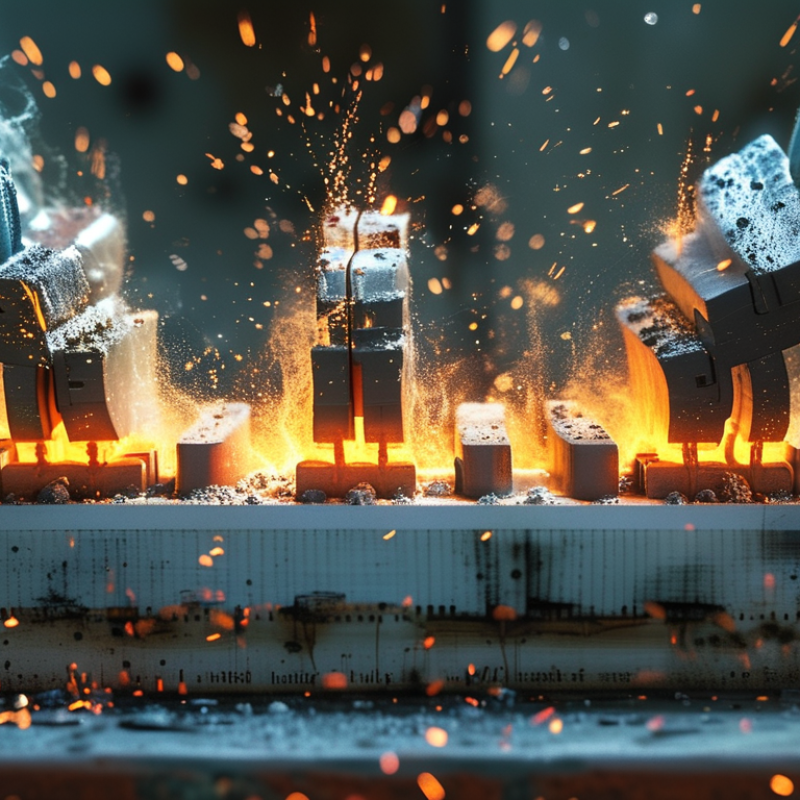
When a high-voltage breaker opens, current does not stop instantly. The separating contacts create an intense electric field across the narrowing gap. Hot metal vapor, ionized air, and magnetic energy can sustain a bright arc. You may see a blue-white flash, hear a sharp crack, and smell heated insulation. The danger is not only visible damage. Arc energy can erode contacts, weaken insulation, and trigger repeated restrikes.

J. C. Das, a recognized power-system protection author, states, “Successful interruption depends on controlling the arc before the contact gap loses dielectric strength.” This principle explains why breaker design matters. Vacuum, SF6, air-blast, and oil breakers use different arc-extinguishing methods. Each method depends on contact speed, pressure, dielectric recovery, and fault-current magnitude. In practice, engineers inspect contact wear, verify timing, and test insulation resistance under controlled conditions. Small timing errors matter.

This article examines how to prevent arcing in high voltage circuit breakers through coordinated design, maintenance, and testing. Operators should select a breaker with sufficient interrupting capacity. They should also confirm correct relay settings and trip-coil performance. Clean contacts help. So does proper lubrication, where the manufacturer permits it. A loose terminal or delayed mechanism can turn a manageable fault into severe equipment damage.

The real lesson is less comfortable. Prevention is not a single adjustment. It is a system of decisions, inspections, and disciplined procedures. Even experienced teams can miss hidden wear. That weakness deserves attention. Reliable records, qualified testing personnel, and manufacturer guidance provide the strongest practical defense against uncontrolled arcing.
Why Do High Voltage Breakers Arc and How to Prevent It?

How High-Voltage Breakers Arc: 10,000–20,000 K Plasma at 50/60 Hz

When a high-voltage breaker opens, current does not stop instantly. Contact separation creates a narrow, intensely heated plasma channel. Its temperature can reach roughly 10,000–20,000 K, according to widely cited electrical safety data from the U.S. Department of Labor. At 50 or 60 Hz, alternating current naturally approaches zero 100 or 120 times per second. The breaker must cool and de-ionize the plasma before the voltage rises again.

The critical moment is current zero. CIGRE Technical Brochure 510 explains that interruption depends on dielectric recovery, contact speed, and transient recovery voltage. IEEE guidance also treats transient recovery voltage as a major breaker duty. If recovery is too slow, the arc restrikes. Gas pressure, moisture, worn contacts, and excessive fault current can worsen this process. The plasma is not perfectly uniform. Laboratory models often simplify real switching chambers, which deserves more careful review.

Tips: Select equipment tested under IEC 62271-100 conditions. Check rated short-circuit current and transient recovery voltage. Inspect contact wear, insulation, and operating mechanisms regularly. Keep interrupter compartments clean and dry. Use condition-monitoring data, not visual inspection alone. A practical maintenance record should include opening time, contact resistance, operation count, and unusual acoustic or thermal signals. Small timing errors matter.

Where Arcing Starts: Contact Separation, Ionization, and Dielectric Failure

When high-voltage breaker contacts begin to separate, current does not stop instantly. A tiny gap forms, yet the electric field remains intense. Metal surfaces release electrons, while heated contact material vaporizes into the gap. This mixture becomes conductive plasma. The arc has started.

As the contacts move farther apart, ionization can continue through the surrounding gas. Moisture, dust, pressure changes, and worn contact surfaces can make this path easier to maintain. Dielectric failure occurs when the gap cannot withstand the recovery voltage after current interruption. The result may include repeated restrikes, severe heat, contact erosion, and insulation damage. Field inspections often reveal uneven contact wear near the point where separation begins. That detail matters.

Prevention depends on controlling both the interruption process and the insulation environment. A breaker needs correct contact speed, sufficient travel distance, and a reliable arc-quenching medium. Maintenance teams should inspect contact alignment, surface condition, operating mechanisms, and insulation cleanliness. Timing tests can expose slow opening or inconsistent pole movement before failure becomes visible. Sensors and test records add useful evidence, but they do not replace direct inspection. No procedure is perfect. Even a clean test result may miss a developing mechanical fault. Engineers should compare readings with previous results, follow approved isolation practices, and investigate unusual noise, smell, heating, or partial-discharge activity immediately.

How TRV and RRRV Drive Reignition Under IEC 62271-100 Tests

Why Do High Voltage Breakers Arc and How to Prevent It?

When a high-voltage breaker opens, the arc may continue between separating contacts. The interruption becomes critical near current zero. At that moment, the system produces a transient recovery voltage, or TRV, across the contact gap. TRV rises quickly. Its rate of rise, called RRRV, can exceed the gap’s dielectric recovery strength. Reignition then occurs, sometimes within microseconds. That distinction matters.

Under IEC 62271-100 tests, engineers compare the measured voltage waveform with the specified TRV envelope. Fault type, rated voltage, current, and circuit parameters shape the test duty. Stray inductance and capacitance also influence the waveform. In practice, the waveform is never perfectly clean. A single probe connection can distort the result. Careful calibration and correctly positioned voltage dividers are essential.

Prevention starts with sufficient contact speed, proper contact travel, and stable arc-control performance. The interrupting chamber must restore insulation faster than the TRV rises. Designers may adjust grading components, circuit geometry, and controlled switching settings to reduce electrical stress. Test teams should inspect contact wear, gas pressure, timing differences, and mechanical scatter before blaming the interruption medium. A fast breaker is not automatically a reliable breaker. The difficult part is matching mechanical motion with dielectric recovery. One overlooked variable can create a misleading pass or failure.

How Vacuum, SF₆, and Air-Blast Media Extinguish Arcs Above 1 kV

High-voltage breakers arc because separating contacts leaves an ionized path between them. Above 1 kV, stored electrical energy heats this channel rapidly. The arc can stretch several centimeters, producing bright light, pressure, and metal vapor. IEC 62271-100 treats arc interruption as a coordinated process involving current zero, dielectric recovery, and contact movement. A small timing error can cause restrike.

Vacuum breakers remove most particles from the gap. At current zero, metal vapor condenses quickly on shields and contacts. This gives vacuum interrupters strong dielectric recovery, especially in medium-voltage networks. However, poor contact conditioning may trigger steep transient voltages. CIGRE technical guidance on vacuum switching recommends controlling contact geometry, travel speed, and load characteristics rather than relying on vacuum alone.

SF₆ captures free electrons and cools the arc efficiently. Its performance remains predictable in compact equipment, but leakage and decomposition require strict monitoring. The IPCC Sixth Assessment Report assigns SF₆ a 100-year global-warming potential of about 25,200 times that of carbon dioxide. Air-blast breakers use compressed air to cool and sweep away ionized particles. They can interrupt high currents quickly, yet compressors, valves, and moisture control add failure points. In practice, insulation testing, contact-travel measurements, and gas-quality checks prevent more faults than visual inspection alone. That lesson is easy to underestimate.

Why Do High-Voltage Breakers Arc?

Normalized dielectric recovery after current zero in vacuum, SF₆, and air-blast interrupters above 1 kV.

When breaker contacts separate, the current creates a hot, ionized plasma path. Interruption succeeds only when the medium regains dielectric strength faster than the transient recovery voltage rises. The curves are normalized engineering illustrations: vacuum recovers rapidly because charged particles are removed from the contact gap, SF₆ cools and de-ionizes the plasma through electronegative gas behavior, and air-blast breakers use high-velocity gas flow to cool and sweep away ionized particles.

How to Prevent Arcing: Contact Timing, Insulation, and IEEE C37.04 Ratings

When high-voltage breaker contacts separate, the current does not stop instantly. Heat ionizes the gap, creating a conductive arc between the contacts. Contact timing strongly affects this event. If one pole opens late, it may carry current longer and experience greater thermal stress. A timing analyzer can measure opening time, closing time, pole spread, and contact bounce. Small differences matter.

Very small errors can become expensive failures. Insufficient contact travel may leave the gap too short for reliable interruption. Mechanical wear, weak springs, and incorrect linkage adjustment often cause this problem. Insulation needs equal attention. Dust, moisture, damaged barriers, and poor creepage distances can support surface tracking or flashover. Keep insulating surfaces clean and dry. Check clearances after maintenance, not only during commissioning.

IEEE C37.04 ratings help engineers match a breaker to its system duty. Review rated voltage, continuous current, short-circuit interrupting capability, and transient recovery voltage requirements. The breaker must handle the actual network, including asymmetrical fault current and switching conditions. A suitable rating on paper is not enough. System studies and verified test data should support the selection. In practice, maintenance records sometimes miss gradual contact erosion. That omission deserves more attention. Examine contact wear, insulation condition, operating time, and trip-coil performance together. One healthy measurement cannot prove the whole interrupter is reliable.

FAQS

Why does a high-voltage breaker create an arc when contacts separate?

Separating contacts leave an ionized path. Stored electrical energy heats this path into plasma. The plasma may reach 10,000–20,000 K. It can produce bright light, pressure, and metal vapor.

When does arc interruption become most critical?

The critical moment is current zero. Alternating current reaches zero 100 or 120 times each second at 50 or 60 Hz. The breaker must cool and de-ionize the gap before voltage rises again. Timing errors can cause restriking.

What causes an arc to restrike?

Restriking occurs when insulation recovery is too slow. High recovery voltage can exceed the gap’s temporary strength. Moisture, gas pressure, worn contacts, and high fault current worsen the risk. Small errors matter.

How do vacuum interrupters extinguish arcs?

Vacuum interrupters remove most particles from the contact gap. At current zero, metal vapor quickly condenses on shields and contacts. This supports rapid dielectric recovery. Poor contact conditioning may still produce steep transient voltages.

How does sulfur hexafluoride help extinguish an arc?

Sulfur hexafluoride captures free electrons and cools the arc efficiently. It can provide predictable insulation in compact equipment. Leaks and decomposition products require careful monitoring. Its environmental impact deserves serious attention.

How do air-blast breakers extinguish arcs?

Compressed air cools the arc and removes ionized particles. These breakers can interrupt high currents quickly. Compressors, valves, and moisture control create additional failure points. More components mean more inspection needs.

Which maintenance checks help prevent arcing problems?

Measure opening time, closing time, pole spread, and contact bounce. Check contact resistance, contact wear, insulation condition, and trip-coil performance. Inspect mechanisms, springs, barriers, and clearances. Keep compartments clean and dry.

Can visual inspection alone confirm breaker reliability?

No. A clean surface can hide contact erosion or timing drift. Use condition-monitoring data, thermal signals, acoustic signals, and travel measurements. Review operation counts and unusual changes in records. One healthy reading proves very little.

Conclusion

High-voltage circuit breakers arc when separating contacts create an electrically conductive plasma channel, where temperatures can reach approximately 10,000–20,000 K at 50/60 Hz. Arcing begins with contact separation, metal vaporization, gas ionization, and a temporary loss of dielectric strength. During interruption, transient recovery voltage (TRV) and its rate of rise (RRRV) can stress the contact gap and cause reignition, especially under IEC 62271-100 test conditions.

The arc is extinguished by cooling and deionizing the plasma, restoring insulation, and controlling current interruption. Vacuum interrupters rely on rapid dielectric recovery, while SF₆ and air-blast systems use gas movement and cooling to suppress ionization above 1 kV. To understand how to prevent arcing in high voltage circuit breakers, engineers must coordinate contact timing, maintain suitable insulation distances, manage pressure and gas quality where applicable, and select ratings consistent with IEEE C37.04. Proper testing, inspection, and operating control further reduce the risk of sustained arcing and equipment damage.

Isabella

Isabella

Isabella is a dedicated marketing professional with a sharp focus on driving brand growth and engagement through strategic content creation. With an extensive background in digital marketing, she combines her passion for storytelling with her keen understanding of industry trends to deliver......